Data as of 2026-11-27
What the federal standard means by chassis
Subpart J of 24 CFR Part 3280 defines the chassis as the home's entire transportation system. It has four parts:
- Frame: the rigid structure under the floor. It supports the home on the road and after it is installed.
- Drawbar and coupling: the hitch at the front that connects the home to the tow truck.
- Running gear: the springs, axles, bearings, wheels, hubs, tires and brakes.
- Lights: the road lights and wiring used during the trip.
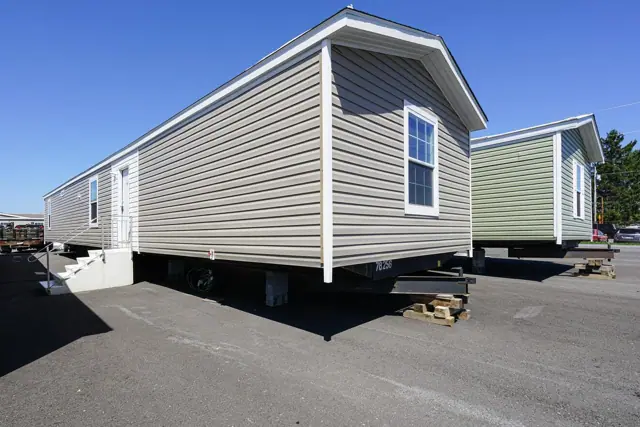
The frame is typically a pair of long steel I-beams running the length of each section, tied together by cross members, with outriggers reaching out toward the side walls. A double-wide has a frame under each half.
Being built on a permanent chassis is part of the legal definition of a manufactured home. It is one of the plain differences from a modular home, which is built to state and local building codes and is often hauled on a separate carrier and lifted onto its foundation. Our page on manufactured vs modular homes covers the rest.
What it has to withstand
The standard requires the home and its transportation system to survive highway travel, so that the home arrives able to be installed as a sound, livable structure with plumbing, heating and electrical systems that still work. Factories show this by road tests, by engineering analysis or by both.
What comes off and what stays
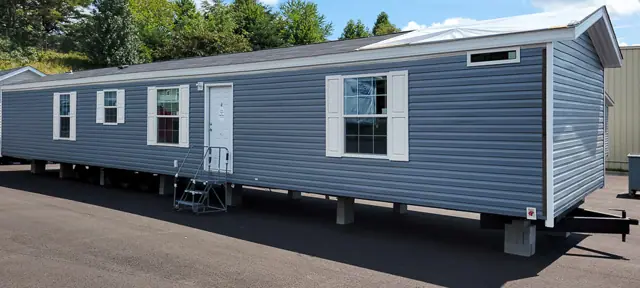
Once the home is on its supports, the installer usually removes the hitch, axles and wheels. Some mortgage programs require that. The steel frame is not removed. It goes on carrying the floor for as long as the home stands.
The frame is also what the rest of the installation connects to:
- Piers sit under the main beams, and the lowest part of the frame must clear the ground by at least 12 inches.
- Anchor straps run from the main beams to anchors in the ground and hold the home against wind.
- Skirting closes in the space around it.
Three things worth knowing as a buyer
- Length on paper: the hitch is not counted. Under the federal definition, a home's length leaves out drawbars, couplings and hitches.
- Buying used: look under the home, or have an inspector do it. Heavy rust, bent beams or cut cross members are reasons to ask questions.
- Moving later: because the frame stays, running gear can be refitted to move the home. Transport and re-installation rules vary by state, so ask the state manufactured housing agency first.
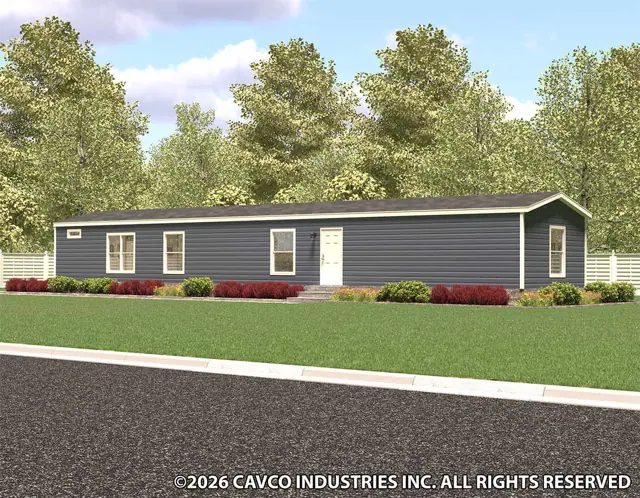
Every plan in our single-wide homes collection rides on one frame; multi-section homes have one per section.