Data as of 2026-11-27
Which path suits you
- Rent a lot if you want to move in with the least money down, you would rather not manage a well, a septic system or a driveway, you like having neighbors and managed roads, or you are not sure you will stay in the area.
- Buy land if you plan to stay for many years, you want to decide what happens on the property, you can pay for site work before the home arrives, and you want the widest choice of loans.
There is a third path in some places: a community owned by its residents through a cooperative. Members own a share of the land together and run the community themselves. Ask whether one exists near you.
Side by side
| Point | Rented lot | Your own land |
|---|---|---|
| Upfront cost | Low: deposit and first rent, plus moving and setting the home | High: the land, site work and utilities, plus moving and setting the home |
| Monthly cost | Lot rent, which can rise, plus the home payment | Land and home payments, property tax and upkeep |
| Site readiness | Pad and utility hookups are usually in place | You arrange grading, utilities and access |
| Control | Community rules apply | Zoning and any deed restrictions apply |
| Main risk | Rent increases, or the community closing | Site work costing more than planned |
| Loans | Home-only loans | Home-only, land, combination or mortgage |
| Selling later | You sell the home; the buyer needs the community's approval or a new site | You sell the home and land together |
Upfront cost
On a rented lot you normally pay a deposit and the first month of rent, and sometimes an application fee. The site usually has a pad and utility hookups already.
With land you pay for the land itself and for everything that makes it ready: a survey, permits, clearing and grading, a driveway, and either utility connections or a well and a septic system. These costs differ so much from county to county that no honest general figure exists. Get written quotes from local contractors before you buy.
The cost of moving the home and setting it up is the same on both paths. The low-end estimates used by our quote builder are:
- Delivery, first 60 miles: $700 when the home is one section, $2,000 when it is a double-wide.
- Set-up: $2,000 for a single-wide, $4,000 for a double-wide.
- Pier foundation: $1,000 or $2,000.
- Skirting: $1,000 or $2,000.
Those lines do not include land, lot rent, a well, a septic system or a driveway. Run the numbers for a specific home in the quote builder, and read how it works for the order of the steps.
The federal installation standards (24 CFR Part 3285) expect a home to stand on firm soil that is graded so water drains away from it. On your own land, getting the site to that point is your job. In a community, ask who is responsible for the pad.
Monthly cost
On a rented lot you pay lot rent, the payment on the home, utilities, insurance and any tax your state charges on the home. Rent can go up over time. How often, and with how much notice, depends on the lease and on state law.
On your own land there is no lot rent. In its place come the land payment, if you borrowed for it, property tax, and the upkeep of whatever the site needs, such as a septic system or a gravel drive. That is not always less per month. The difference is that it replaces a bill someone else sets with costs you can plan for.
How a manufactured home is taxed varies by state and can depend on whether it is titled as personal property or real estate. The county assessor can tell you what applies.
Control and risk
A community comes with rules. They can cover the age, size and look of the home, skirting and steps, sheds and fences, pets, vehicles and guests. In return, someone else maintains the roads and shared areas.
The risks are rent increases, rule changes, and the chance that the owner sells or closes the community. A home can be moved, but that means paying for transport, set-up and a foundation a second time and finding a site that will accept it. Tenant protections for community residents vary by state. Your state housing agency or the consumer office of the state attorney general can explain them.
Land gives you the say, within limits. Zoning has to allow a manufactured home on the parcel, and deed restrictions or subdivision covenants can forbid one or set a minimum size. Check both with the county planning office before you sign for the land. After that, every repair and every bill on the site is yours.
Financing options
On a rented lot, the loan is secured by the home alone. FHA Title I rules (24 CFR Part 201) allow an insured loan for a home placed on a leased site in a manufactured home park, and they have the lender confirm that the park meets standards for road access, water, sewage and utility connections.
Land opens more doors. The same Title I rules cover loans for a lot and combination loans for a home and lot together. A mortgage becomes possible when the home is on a permanent foundation and the home and site are classified and taxed as real estate, as the FHA mortgage rules in 24 CFR Part 203 put it. Freddie Mac adds that land the borrower already owns may be used as an equity contribution, subject to conditions.
None of this is a promise of approval. A lender decides, and our financing page explains the usual routes.
Resale
In a community you sell the home but not the ground under it. The buyer either keeps it on the lot, which normally needs the community's approval and a lease of their own, or pays to move it. That narrows the pool of buyers, and so does the fact that they will be shopping for home-only loans.
On your own land you sell the home and the land as one property. If the home is titled as real estate, a buyer may be able to use a mortgage. The land also has a value of its own, separate from the home.
Neither path guarantees a gain. What a home sells for depends on its condition, the local market and, where there is land, the land.
What to check in a community lease
- Term: how long the lease runs and how it renews.
- Rent increases: how often rent can rise, by how much, and the notice you get.
- What rent covers: water, sewer, trash, road upkeep and amenities, and what is billed separately.
- Fees and deposits: application, pet and late fees.
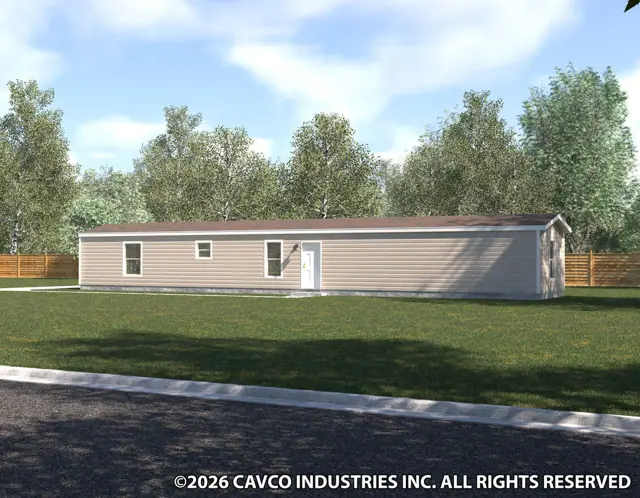
- Rules for the home: allowed size and age, exterior, skirting, steps, decks and sheds. Some sites take only a single-section home, so check these before you choose between the single-wide homes and larger plans.
- Upkeep: who maintains the pad, the trees and the utility lines up to the home.
- Selling: whether the home can be sold in place, whether the community must approve the buyer, and whether it has a first right to buy.
- Sale or closure of the community: the notice you would get and any help with moving.
- Ending the lease: the grounds for eviction and what happens to the home.
Read the community rules as well as the lease, and keep a signed copy of both.