Data as of 2026-11-27
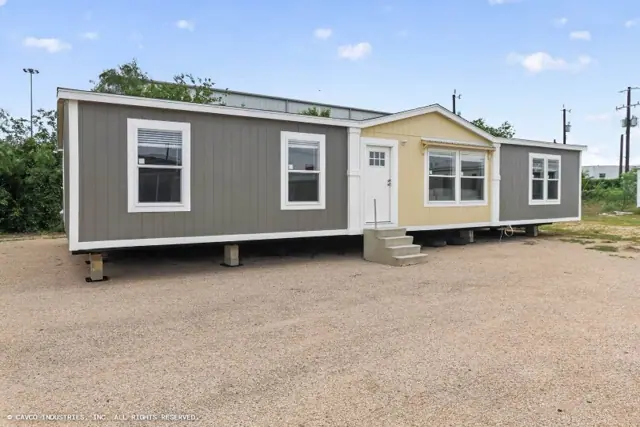
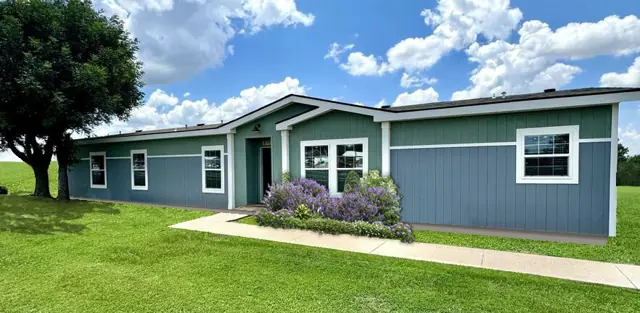
How a manufactured home travels
A manufactured home is its own trailer. Each section is built on a steel chassis with axles, wheels and a hitch, and the federal construction standards require the structure to be designed to stand up to the shock and vibration of the trip (24 CFR Part 3280, Subpart J). A heavy truck pulls each section from the factory to your land.
- One wide load per section. A single-wide is one load. A double-wide is two loads and a triple-wide is three, each with its own truck and driver.
- Road permits. A section is wider than the normal legal limit for a vehicle, so it needs an oversize-load permit from every state on the route. Permits are issued per section.
- Escort cars. States commonly require one or more escort cars, also called pilot cars, to travel with a wide load and warn other drivers. How many, and on which roads, varies by state.
- A planned route. The carrier picks roads the load fits. Bridges, overpasses, low wires and tight corners all rule roads out, so the distance driven can be longer than the map suggests.
The transport company normally arranges the permits and the escorts. State rules also set when and where wide loads may travel, which is one more reason a carrier cannot always take the shortest road.
What drives the price
- The number of sections. Almost every charge is counted per section, so this is the biggest factor.
- Distance from the factory. Homes in our catalog are built at 29 factories in 16 states, and each home ships from the factory that builds it. The same floor plan costs more to move the farther you are from that factory.
- States crossed. Each state on the route means another permit for each section.
- Escorts. Escort cars are charged by the mile, like the truck.
- Site access. A narrow road, a steep or soft driveway, trees or overhead lines can mean extra equipment or labor to get the sections into position. This is priced case by case and is not in any standard estimate.
The estimates our quote builder uses
The quote builder works out the distance from the home's factory to your ZIP code and prices the trip with the figures below. Every figure in the table is a low-end estimate used by our quote builder, not a quote from a carrier.
| Charge | Single-wide | Double-wide | Triple-wide |
|---|---|---|---|
| Wide loads on the road | One | Two | Three |
| Delivery, first 60 miles | $700 | $2,000 | $3,000 |
| Towing beyond 60 miles | $4 a mile | $4 a mile for each of two sections | $4 a mile for each of three sections |
| Escort car beyond 60 miles | $1.50 a mile | $1.50 a mile for each of two sections | $1.50 a mile for each of three sections |
| Road permits | $50 per state | $50 per state for each of two sections | $50 per state for each of three sections |
Two things stand out. Within 60 miles the charge is flat, so a site close to the factory is simple to price. Beyond 60 miles every extra mile is charged once per section, so distance weighs more heavily as the home gets bigger.
A worked example
Take a double-wide going to a site 200 miles from its factory, on a route that passes through two states. Using only the low-end estimates used by our quote builder, the lines are:
- First 60 miles: $2,000 for the two sections together.
- Remaining distance: 140 miles, driven by each of the two sections, which makes 280 section-miles.
- Towing: 280 section-miles at $4 a mile.
- Escort cars: 280 section-miles at $1.50 a mile.
- Permits: two sections in two states is four permits at $50 each.
The estimate is lines 1, 3, 4 and 5 added together, and the quote builder does that sum as soon as you enter a ZIP code.
Change one thing at a time to see what matters. Move the same home to a site 60 miles from the factory in one state, and the list shrinks to the first line plus two permits. Send a single-wide on the 200-mile trip instead, and it becomes $700, then 140 miles of towing and escort for one section, then two permits. Make the home a triple-wide, and the first line is $3,000, the mileage is counted three times and there are six permits.
What a delivery price does not cover
Delivery ends when the sections are on your land. These are separate lines on a quote:
- Set-up: placing the home on its foundation, leveling it, joining the sections and anchoring it. How it works shows where this comes in the purchase.
- The foundation: piers and footings, or a slab.
- Site preparation: clearing, grading and a firm path for the truck.
- Everything after the set: utility connections, local permits for the home, steps and skirting.
Sellers do not all draw the line in the same place. Ask whether a quoted figure includes escorts, permits and positioning the sections on the foundation, or only the haul to the edge of the property.
Ways to keep the bill down
- Look at where the home is built. Because mileage is charged per section, a similar floor plan from a closer factory can cost less to bring in. Each home's page shows the state where it is built, so check that as you browse the floor plans.
- Weigh size against distance. Far from the factory, a large single-wide moves as one load where a small double-wide moves as two. If the floor areas are close, the trip may tip the choice.
- Have the site ready. The federal installation rules advise that a home should not be moved until the site is prepared and utilities are available (24 CFR Part 3285). A home that arrives before its foundation may have to be parked and handled twice.
- Clear the access. Walk the last stretch with the seller or the carrier before you order. Check the gate width, the turns, overhanging branches, wires and soft ground.
- Get the breakdown in writing. A single lump sum hides what is and is not covered. A list of lines lets you compare two sellers fairly.
Modular homes travel differently
A modular home is also built in sections at a factory, but at the site its sections are usually lifted onto the foundation by crane. For that step the low-end estimate used by our quote builder is $5,000 for the crane and crew, on top of the transport. Manufactured vs modular explains how the two kinds of home differ.